
Drug Policy Australia’s submission to the UN drug policy Expert Panel
Written by Greg Chipp
November 16, 2026
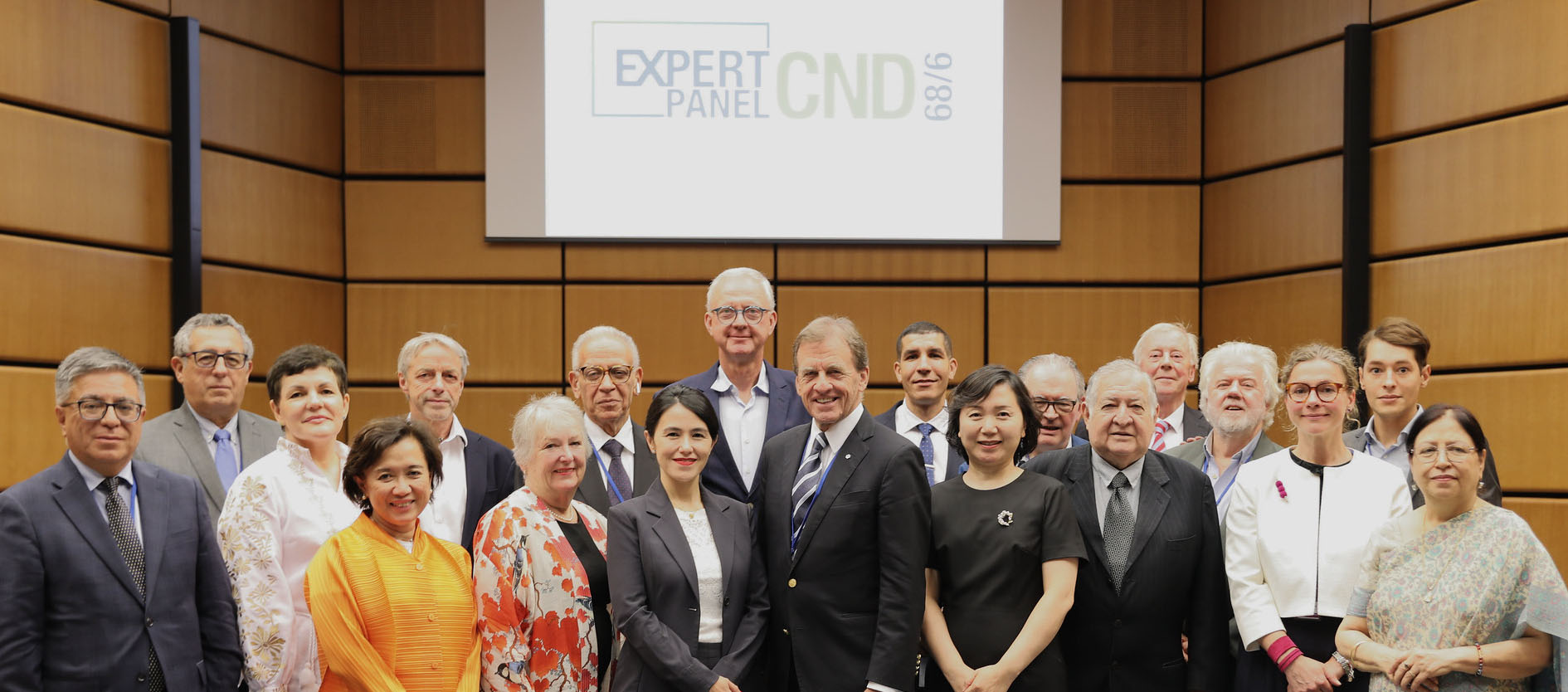
Drug Policy Australia’s submission to the United Nations Commission on Narcotic Drugs Expert Panel calls for a single treaty centred on public health and human rights, and an end to criminal penalties for personal drug use and possession. Read the full submission below.
Photo source: UNODC / Commission on Narcotic Drugs
Drug Policy Australia calls for the three international drug conventions to be replaced by one treaty centred on public health and human rights, enabling member states to establish a legally regulated framework. Prohibition has failed to deliver the health and welfare it promised. We ask the Panel to recommend that states begin negotiating a replacement.
We propose that member states prepare a negotiating mandate before the 2029 review, then ask ECOSOC to consider convening a conference under Article 62(4) of the UN Charter to negotiate one replacement treaty.
The United Nations drug treaties arose in different international circumstances beginning 65 years ago. The 1961, 1971 and 1988 conventions established controls over narcotics, psychotropics and trafficking. Today, transnational syndicates coordinate via encrypted messaging, move drugs across oceans in submarines, and exploit expanded global trade to conceal drugs in shipping containers. Meanwhile, synthetic opioids such as fentanyl analogues and nitazenes are rapidly altered to evade scheduling. Together, these developments make enforcing these archaic treaties both impossible and counterproductive.
The 1998 UN special session promoted “A drug-free world” and aimed to eliminate or sharply reduce illicit cultivation and manufacture by 2008. UNODC’s own figures show that this goal failed miserably.
Drug use has been part of the human experience since ancient times and will continue. The fantasy of a drug-free world has consumed public money and given political cover to persecution and lethal violence. Under then-President Rodrigo Duterte, the Philippines’ anti-drug campaign killed thousands; OHCHR reported at least 8,663 deaths by 2020. Our treaty must reject that goal and protect life, health and human rights.
Drug Policy Australia and lived experience
Drug Policy Australia Limited is a health promotion charity established in 2014 to minimise the health consequences of illicit drugs. We have held special consultative status with ECOSOC since 2017. Our founding group included Greg Chipp, Dr John Sherman, an addiction specialist with over 45 years’ experience, and Tony Trimingham OAM, who founded Family Drug Support after his son Damien died from a heroin overdose.
Managing Director Greg Chipp’s personal story
I have used illicit drugs and have known both pleasure and despair from them. When I developed a drug problem, prejudice, misunderstanding and stigma kept me from seeking medical help for three years. Quality healthcare and the love and support of my family helped me recover. My late father, Don Chipp, a former Minister for Customs and Excise, often said governments could not stop young people from using drugs. Government policy can make experimentation more dangerous or reduce its risks. I urge the Panel to recommend reform so people can seek help without fear and families need not lose loved ones to a dangerous illicit supply.
The consequences of prohibition
Drug use can cause serious harms, but prohibition exacerbates and compounds that harm. Criminalisation adds stigma and barriers to care. Illicit markets expose consumers to contamination and unpredictable potency. Penington Institute reported a preliminary count of 2,091 unintentional drug-induced deaths in Australia in 2024.
UNODC estimates that 331 million people aged 15 to 64 used drugs in 2024, 34% more than in 2014. The proportion using drugs also increased, by about 20% over the decade. UNODC reports rising drug-attributable deaths through 2023. Its early warning system describes new synthetic substances made to evade controls. Prohibition has failed to stop drug use while creating new harms. A replacement treaty must make reducing harm the purpose of international cooperation.
Prohibition cedes a vast market to organised crime. UNODC estimated global illicit drug retail sales at about US$320 billion in 2003. Such proceeds can fund violence and corruption and undermine public institutions. Regulated supply could shift sales to legitimate, taxpaying businesses.
Prohibition gives governments licence to pursue disproportionate punishment that costs lives. Harm Reduction International documented at least 1,212 executions for drug offences in 2025, excluding undisclosed totals in China, North Korea and Vietnam. OHCHR’s 2023 report cited an estimated 2.5 million people imprisoned for drug offences worldwide. The conventions require neither executions nor imprisonment for every instance of personal possession, but they do not prohibit the death penalty. We ask the Panel to recommend that the replacement treaty ban the death penalty for drug offences.
End criminalisation of personal use and possession
The 1988 Convention calls for criminal offences for intentional personal possession, purchase or cultivation, subject to constitutional and legal safeguards. It permits alternatives to conviction or punishment; INCB recognises scope to decriminalise possession of small quantities. Neither guarantees protection from prosecution. A new treaty should ban criminal penalties for personal use and possession.
Possession laws can deter people from using drug checking. The replacement treaty should protect people bringing samples for testing and staff handling them.
Alternative approach - regulated market
Legal regulations would make producers and suppliers accountable. A new treaty should permit substance-specific systems with licensed production, independent quality testing, accurate content and dose labels, age restrictions, child-resistant packaging and advertising controls. Lawful international trade needs traceability, import and export oversight and safeguards against diversion. Higher-risk substances may warrant supervised or clinical access. Access to essential medicines must be protected.
Prohibition also has an opportunity cost. Transform estimated in 2015 that enforcing prohibition cost at least US$100 billion globally each year. That dated estimate shows the scale of funds that could support health and other services. Australia spent about A$3.5 billion on drug-law enforcement in 2021/22. Taxing regulated sales could provide additional public revenue for care.
Regulation cannot prevent every harm. Controls should reflect each substance’s risks: higher-risk opioids could require prescriptions and pharmaceutical controls; lower-risk substances could be sold by licensed outlets with limits on age, strength, packaging and promotion. Public oversight can detect and manage harms hidden by illicit markets. Rules must resist commercial pressure to increase consumption.
Recommendations
1. Prepare a replacement treaty. Ask CND member states to establish an open preparatory process before the 2029 review, involving WHO, OHCHR, UNODC, INCB, civil society and affected communities. It should propose a mandate and timetable. Ask ECOSOC to consider convening a conference of plenipotentiaries under UN Charter Article 62(4), with General Assembly support. The treaty must reject the drug-free-world goal, enable responsible regulation, protect young people and ban the death penalty for drug offences.
2. End criminalisation of personal use and possession. Require the replacement treaty to protect possession of small quantities for personal use from criminal penalties, with thresholds that do not misclassify users as traffickers. Commercial production and sale should remain subject to proportionate domestic regulation. Meanwhile, ask member states to decriminalise personal possession, review past convictions and provide voluntary treatment without a criminal justice gateway.
3. Make the transition lawful and accountable. States must consent to the new treaty and resolve existing obligations through agreed transition and termination arrangements, including relations with non-participating states. Governments should publish budgets and independently evaluate deaths, youth use, poisonings, service access, illicit supply and unequal enforcement. People affected should be consulted in shaping the new rules.
References
- UN drug conventions, 1961/1972, 1971 and 1988, arts 4, 36; 5, 22; 3.
- UNODC, World Drug Report 2026.
- UN, A/RES/S-20/2, 1998; UNDCP, A drug-free world.
- DPA, Our Story; Our People; August 2025 newsletter, Sherman’s experience.
- OHCHR, A/HRC/54/53, 2023.
- Penington Institute, Australia’s Annual Overdose Report 2026, table 12.1.
- HRI, Global Overview 2025.
- Ritter et al., Australian drug budget, 2024.
- Victoria Health, Fitzroy service, 27 August 2026; CanTEST, 3 October 2025 notice.
- INCB, Annual Report 2021, paras 378-380, decriminalisation and treaty flexibility.
- Transform Drug Policy Foundation, Models of regulation.
- Vienna Convention on the Law of Treaties, arts 11, 30, 54, 59.
- CND, invitation and resolution 68/6, 2025, annex para 1.
- UNODC, World Drug Report 2012, chapter II.
- OHCHR, Philippines report announcement, 4 June 2020.
- UN NGO Branch, Drug Policy Australia Limited, Special 2017.
- Greg Chipp, Submission to the Victorian Drug Inquiry, Drug Policy Australia.
- UNODC, Early Warning Advisory, What are NPS?
- UNODC, World Drug Report 2026, coca and cannabis trends.
- University of Queensland, Evaluation of Queensland Drug Checking Services, 2025.
- UNODC, World Drug Report 2020, booklets 3–4, market changes and narco-submarines.
- Transform, Count the Costs: Wasting billions and undermining economies, 2015.
- UN Charter, article 62(4), ECOSOC conference power.
Sign in to comment
Recent responses
Get Involved and Join the Movement