Newsletter December 2025

Written by Greg Chipp
March 27, 2026

What do murder on the high seas, drug dogs at music festivals, and illegal strip searches have in common? The answer is the militarisation of the war on drugs.
In an unprecedented escalation of the drug war, the Trump Administration is bombing “suspected” drug boats off Venezuela in international waters. Since September, they have attacked almost 30 small power boats, and in the latest shock, the Washington Post reported that one strike involved a “double tap” killing two survivors clinging to wreckage.
At home, the strip-search class action against NSW police reached a climax in October, with the judge finding in favour of the lead plaintiff. The judge was highly critical of the NSW police routinely using sniffer dogs to justify what her honour considered illegal strip searches. Yet in the face of scathing criticism of police practices and the recommendations of its own drug summit, the NSW government has refused to listen.
The punitive war on drug users rolls on - but so does our fight for reform.

Murder on the High Seas?
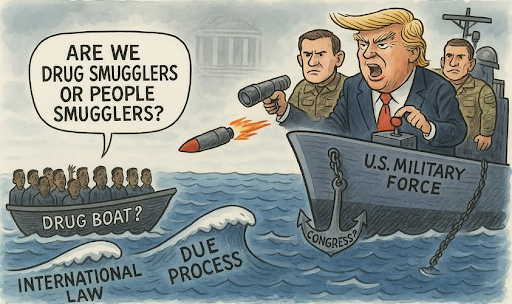
Since September, the U.S. Navy has bombed 28 alleged “drug boats” in international waters coming from Venezuela.
These unprovoked attacks have killed (some would argue murdered) at least 104 people over the last 3 months.
Trump's spurious claim that each destroyed boat “saves 25,000 American lives” (learn more here) is based on U.S. fentanyl deaths, but fentanyl travels to the US via Mexico.
Fact Check: US fentanyl is coming in from Mexico, not Venezuela.
In footage released on social media, you can clearly see that 11 people were on board. You’d think “drug boats” would be full of drugs, not people. Is it possible that some of those killed were economic migrants or fishermen?
These attacks mark a massive escalation in the militarisation of the war on drugs.
In reality, these killings are summary executions by presidential decree, and Trump wasted no time crowing on social media about the “hit” like a mafia don.
These attacks are war crimes, but luckily for the US, they are not a party to the International Criminal Court.
Surely, without due process and legal oversight, this is just state-sanctioned murder.
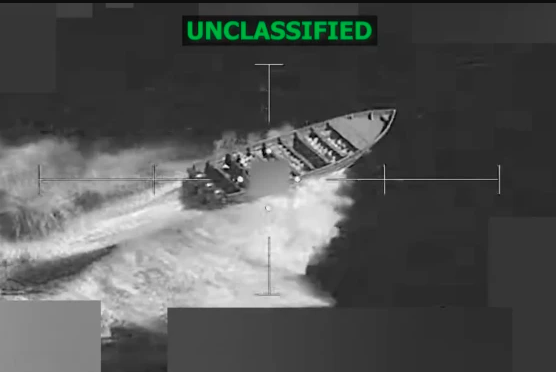 A Venezuelan vessel in the eastern Pacific moments before a U.S. strike on November 15 (Source: NBC News)
Dog sniffs, Cops say strip, Judge says pay up…
NSW Police have been ordered to pay $93,000 to the lead plaintiff after she was unlawfully strip-searched at a festival after a drug dog indication. She was forced to strip, bend over, and remove her tampon.
No drugs were found.
Justice Dina Yehia is yet to award damages to the other 3,000 complainants in the class action, which could cost NSW taxpayers up to $150 million. That’s one hell of a judicial kick in the balls for the NSW police and the Government.
The ruling casts serious doubt on the legality of thousands of sniffer dog searches conducted in train stations, nightclubs, pubs, and on the streets across NSW. Unfortunately, the NSW government is refusing to listen.
Following the win, lawyers for the plaintiff have announced that they are seeking claimants for a second class action for unlawful strip searches conducted in other settings (not just music festivals) since July 2022.
In a belligerent move, the NSW Government and Police filed a Notice of Intention to Appeal. Watch this space.
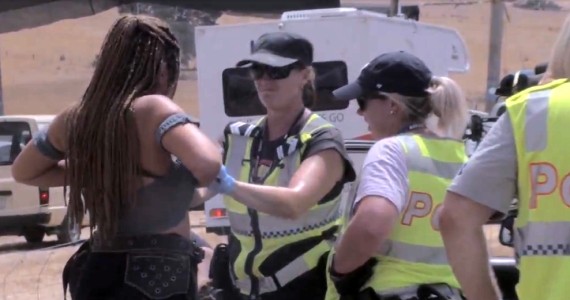
A confronting public drug search at a festival in Victoria.
NSW Government Squibs Drug Inquiry Reforms
The NSW Government has doubled down on its drug prohibition agenda, rejecting harsh criticism of its aggressive tactics. Although accepting 50 minor recommendations, they rejected almost every meaningful reform of their own drug summit.
To be fair, though, they have initiated a pill-testing trial at festivals, but the initiative is undermined by the continued use of military style policing with dogs at festival gates.
Rejected recommendations:
🚫Refuses to legalise or even decriminalise cannabis.
🚫No expansion of safe injecting centres.
🚫Endorses police drug dogs.
🚫Refuses to abolish strip-searches at festivals.
How many lives must be lost for the NSW government to wake up to the fact that arresting people for drug use is not a health strategy?
Queensland Kills Drug Testing
After closing the government-funded pill-testing trial in April, the Queensland government then scuttled The Loop’s plan for a privately funded service. It rushed legislation without consultation, banning all pill testing in Queensland.
This is in the face of data from the pill-testing trial that revealed deadly nitazenes in samples tested. Two people in their 20s have died since the ban, after taking teddy-bear-shaped pills containing the lethal opioid.
This raises red flags ahead of the upcoming Schoolies mayhem on the Gold Coast, which only last year provided life-saving pill-testing services.
Cannabis Drug-Driving Reform - If not now, when, Australia?
Tasmania is the only Australian jurisdiction where a person with a valid prescription can legally drive if they are not impaired. In all other states and territories, driving with medicinal cannabis in your system is illegal, resulting in immediate loss of licence.
Both NSW and Victoria have slammed the brakes on reforming their cannabis driving laws - despite their own parliamentary inquiries recommending reform.
In NSW, the government flatly rejected the recommendation of its parliamentary inquiry, which described reform as the “only rational course of action.”
Meanwhile, in Victoria, driving with any detectable THC in your system is still an offence, but a magistrate can now choose not to suspend a patient's license if they can prove they were not impaired and it was a first offence.
This modest reform does not treat cannabis like other prescribed medications, and patients are still charged if testing positive at a roadside test.
Tasmanian MP Loses Licence for Cannabis Driving
In a sign of the times, independent Tasmanian MP Craig Farland was fined and disqualified from driving after testing positive for THC. Apparently, he was using cannabis for fun without a script, so the exemption did not apply. Read more here.
Crackdown Looms on Medicinal Cannabis Script Mills
Authorities are calling for tighter control over medicinal cannabis scripts after reports of overprescribing by some clinics, with reports that one particular practitioner was issuing a script every four minutes.
This is a symptom of a broken access model.
When will the government acknowledge that legalisation and regulation of cannabis is the only path to safe and transparent access?
Vic Police Still Barred From Carrying Naloxone as More Dangerous Opioids Emerge
Victorian Police are still prohibited from carrying the life-saving opioid reversal treatment "Naloxone", despite the state’s rising overdoses and $95.1 million action plan to reduce drug harm.
Meanwhile...
- WA made Naloxone standard issue in 2021
- Queensland added Nyxoid to police kits in 2024
- ACT Police vehicles are equipped with naloxone nasal spray.
With the number of opioid deaths rising in Australia, a national standard must be set to equip all first responders with Naloxone to save lives!
Synthetic Opioids Lurking on the Dark Web
Nitazenes are popping up more frequently across Australia, hidden in everything from vapes to fake heroin. And the death toll is rising.
They have recently been detected in fake oxycodone tablets.
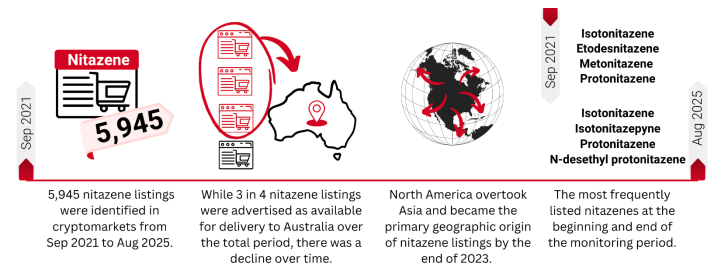 Timeline of nitazenes in Australia since September 2021 (Source: UNSW Sydney - Drug Trends Bulletin Series)
So far, Australia’s isolation has protected us from mass imports of fentanyl and nitazenes. Synthetic drugs have been found in Australia, but the most significant risk appears to be small imports through the dark web, often from the Americas.
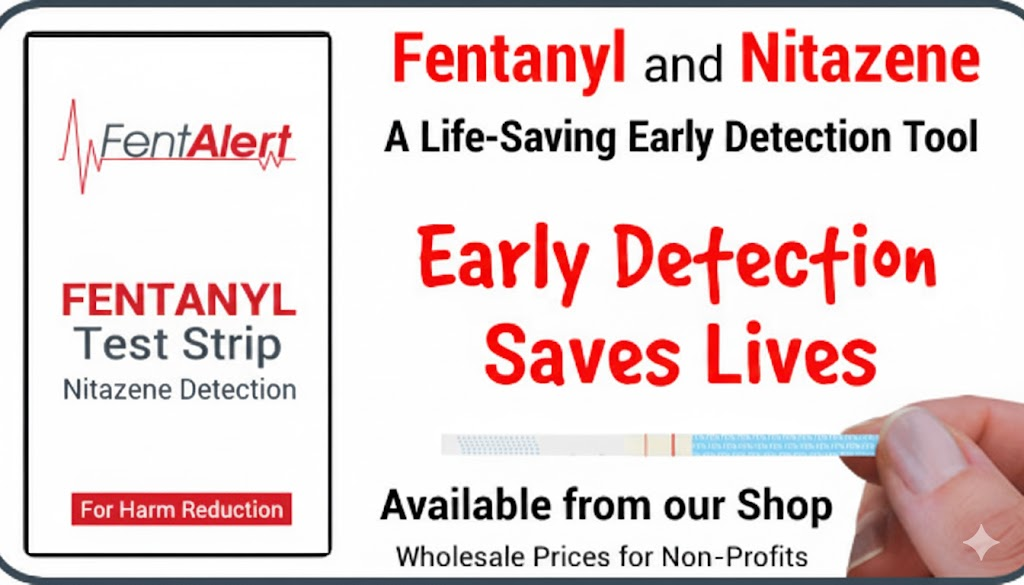
If you or someone you care about is using drugs, please consider purchasing some test strips.
You can purchase fentanyl and nitazene test strips directly through our website here.
Help Prevent Further Overdose Deaths
Your donation helps us advocate for evidence-based reform and support those most at risk.
As a small, self-funded charity, we do not accept government funding, which would compromise our ability to advocate for reform. We rely on your generosity to continue our work for sensible drug policies that reduce harm and promote human rights.
All donations are fully tax-deductible.

Our Street Advocacy
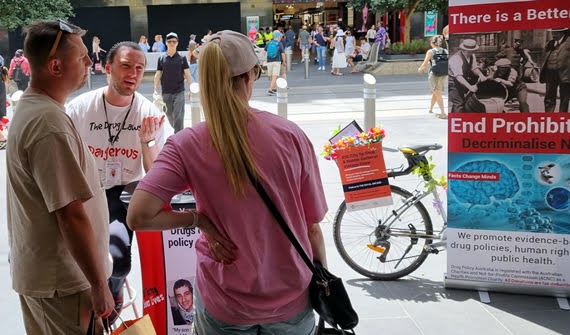
Cooper Verdon, our National Advocacy and Fundraising Manager
Our advocacy team is continuing to take drug reform to the streets.
A heartfelt thank you to everyone who’s stopped to chat, shared their story, or chipped in with a donation. Every conversation helps grow the movement.
Our Submission to the NSW Inquiry into Illegal Tobacco Trade
In August, Drug Policy Australia submitted a detailed brief to the NSW Legislative Council’s Inquiry into the Illegal Tobacco Trade (read it here), arguing that the state’s highly punitive, enforcement-led approach is counterproductive to public health goals.
We argued that the heavy taxation and draconian licensing regimes - effectively acting as a de facto prohibition - are driving dependent consumers into illicit supply chains.
The hearing is scheduled for the 17th of December.

On Again, Off Again: Thailand to Review Cannabis Laws
Thailand’s Health Ministry has pledged to review its cannabis laws again, amid pressure from advocates to revive an industry gutted by the rollback of non-prescription cannabis sales in June.
For now, cannabis remains prescription-only, with dispensaries forced to hire doctors to issue scripts to consumers or shut down. Under this model, the government plans to reduce the number of dispensaries from 18,000 to 2000.
The Health Minister also insisted the endgame is to relist cannabis as a narcotic, bringing jail time for recreational use.
But there is resistance to this approach, especially by the newly elected Prime Minister, who led the push to decriminalise cannabis in the first place.
More to come when the Ministry responds, but for now, tourists: no script, no spliff.
UN WHO Rejects Coca Leaf Reclassification
The World Health Organisation drug committee met in late October to decide whether coca leaf should remain listed as a Schedule I drug, where it currently sits alongside heroin and cocaine.
This comes after the Committee’s review found no significant evidence of harm from traditional use and flagged the harms of prohibition itself.
But in breaking news, the WHO has ruled that the coca leaf should remain in Schedule 1 of the 1961 Single Convention on Narcotic Drugs.
Free E-book: The Case for Reform
Want to talk with your loved ones about drug policy reform but don't have all the answers?
Download our FREE Case for Reform eBook. Equip yourself with the tools to educate your friends and family on the ins and outs of drug reform.
Final Thoughts - Please Support Drug Policy Australia
One Australian dies every four hours from an accidental overdose. These deaths are often preventable. Yet ignorance, stigma, and punitive legislation continue to push vulnerable people over the edge.
Having recovered from my own heroin addiction, I have an intimate understanding that these laws are fundamentally ineffective. They did not help me then, and they are failing the thousands of Australian families who need help today.
When 64% of Australia’s drug policy budget is spent on law enforcement at the expense of treatment, and when police are still targeting vulnerable members of our community - including children - with invasive and unlawful searches, we know that justice is being compromised.
If you share our vision of a compassionate and effective approach to drug policy, please consider making a tax-deductible donation today. Your support helps us in our fight to save lives, challenge stigma, and demand real change.
All donations are fully tax-deductible.
Finally, to our growing community of supporters: thank you. Together, we’re building a future where evidence, not fear, guides drug policy.
Please phone me anytime on 0417 773 372.
Greg Chipp
Managing Director
Dr John Sherman, Lisa van Rooyen
Directors
www.drugpolicy.com.au
Sign in to comment
Get Involved and Join the Movement