
Dog Sniffs. Cop Says Strip. Court Says Pay Up
Written by Caitlin Hull
October 10, 2025
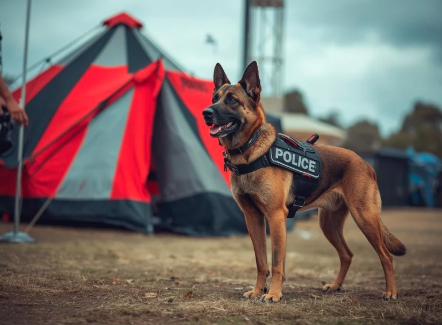
In a landmark decision in late September, the NSW Supreme Court ordered NSW Police to pay $93,000 to Raya Meredith, ruling that the strip search she endured at the Splendour in the Grass Festival in 2018 was unlawful. This outcome is not just about one traumatic experience; it may shake the foundations of NSW policing and expose the deeper failures of its drug policy.
The Case at a Glance
Meredith was detained after a drug-detection dog “sniffed” in her direction. Officers led her to a tent, ordered her to strip, lift her breasts, bend over and remove a tampon. During her ordeal, a male officer entered with no warning.
No drugs were found.
Justice Dina Yehia called the search “egregious”, well beyond the limits of the Law Enforcement (Powers and Responsibilities) Act 2002 (NSW) (LEPRA), and said police had acted in “flagrant disregard” of Meredith’s rights.
After originally defending the indefensible, NSW Police belatedly admitted the search was unlawful, withdrawing 22 planned witnesses. Not one officer took the stand to defend the practice.
Meredith was awarded $43,000 in compensatory damages and $50,000 in aggravated damages. Exemplary (punitive) damages will be decided on in court on the 31st of October 2025.
The Ignored Warnings
In 2018, the Law Enforcement Conduct Commission (LECC) investigated NSW Police’s strip-search practices and found officers were routinely breaking the law - using strip searches as a standard tactic, even on minors.
Its 2020 report called for urgent reform, but the NSW Government ignored most recommendations, and promises to enhance training and oversight never fully took hold.
A Class Action With Far Broader Implications
Meredith’s case is just the leading edge of a class action covering strip searches at NSW festivals between 2016 and 2022. More than 3,000 people have joined, representing the largest class action against police in Australia.
Under NSW law, strip searches are meant to be carried out only in “serious or urgent” circumstances, when lesser searches will not suffice and when the officer has reasonable grounds.
In this case, the court found the police failed to document how those thresholds were met, particularly across the 143 strip-searches that occurred at the festival alone.
The Court heard that the Police Command knew dog indications were unreliable, with a success rate of around 30 percent in locating drugs.
She condemned the “wholly inadequate” internal training and supervision that allowed such overreach to become routine.
Crucially, Justice Yehia noted that senior officers were sanctioning drug-detection operations that routinely involved strip-searching operations at festivals. These findings reveal that the misconduct was not accidental, but institutionalised.
The judgement signals potential massive state liability - estimated by some legal experts at up to $150 million - with reports that lawyers are investigating a second class action covering festival searches beyond July 2022. Sadly, Raya Meredith’s case was not an isolated mistake - it reflects a pattern of systemic abuse.
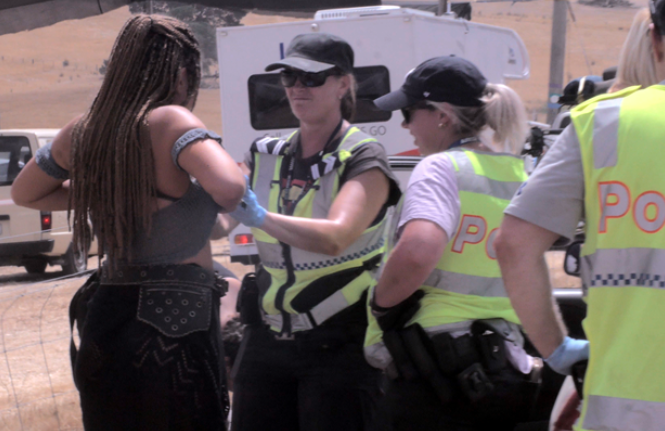
An invasive strip-search conducted at a festival in Victoria
Why This Class Action Matters for Drug Policy
This case rips the mask off a practice long defended as “drug control.” For years, police have used strip-searches as the deterrent, subjecting young people to degrading searches on the flimsiest suspicion.
The real question is whether governments will catch up. Because this ruling doesn’t just indict a single incident - it calls out an entire policing model. The courts have done their part. It’s time for policymakers to step up, dismantle the machinery of humiliation, and build something better.
We believe this signals the beginning of the end for a broken, fear-based drug policy that has done nothing but harm the very people it claims to protect.
You can read Justice Dina Yehia’s full judgement here.
Sign in to comment
Recent responses
Get Involved and Join the Movement